- General
- What We Drive
Making Energy Economical – From Obligatory Task to Efficiency Machine with AI Agents
Foreword
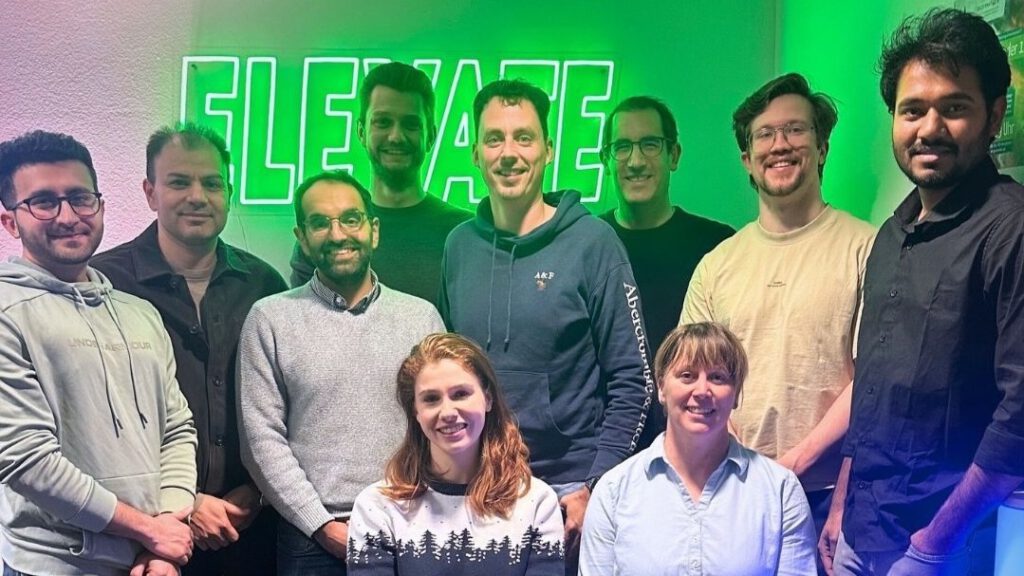
Making energy economical – that is the guiding theme of this interview series. Under the auspices of AXEL, the Energy Accelerator, Klaus Lohnert of freEnergy speaks with selected startups that are developing concrete solutions along the energy industry value chain. The content emerges through dialogue between coach and founders – analytical, honest, and close to reality. Leading off is Kniit GmbH, an AI startup for SAP-based utility processes. The results of the conversation with Managing Director Henrik Ostermann are shared here, because good ideas need visibility – and scaling requires honest feedback.
A Look Behind the Scenes at Kniit – An AI Startup for Utilities
Within the value chain, the startup focuses on the Meter-to-Cash processes of grid operators and energy retailer that use the industry solution SAP S/4HANA for Utilities in Germany. With their highly specialized SaaS solution, they aim to help their customers – energy utilities and IT service providers – reduce process and implementation costs. Kniit is an early bird in the AI business for utilities: since the beginning of 2025, 10 full-time employees have been working to develop digital agents for various tasks. This core team is also supported by very experienced SAP Utilities specialists as needed.
The Problem Kniit Solves
“The road to a self-running utility is still long – and we have set out to walk it,” describes Henrik Ostermann the vision with which Kniit was founded. With digital agents, they aim to help reduce dependency on individual knowledge, dramatically cut costs, improve customer satisfaction, and give employees the freedom to focus on value-adding tasks.
The pressure behind this is real: the energy market is undergoing dramatic change. Regulatory requirements are accumulating, system landscapes are becoming more complex – all in a market where experienced specialists are scarce. The situation will be further exacerbated in the future by demographic change. The question that energy utilities and IT service providers must ask themselves is: “How can they preserve their knowledge so that they can efficiently operate and further develop their system landscape – through every transformation, every format change, and every system expansion?” Today, when key performers and project teams leave, a large part of their knowledge goes with them – this must be avoided. Kniit addresses exactly this challenge. With initial pilot projects, the team is gathering the experience it needs to scale later. In the first step, a hybrid approach is pursued, meaning the solution supports the human. This ensures that employees retain full control. Currently, three use cases are under further development:
- Clarification Case Processing:
Case advisor for MaCo to make the management of failed processes more efficient. - Chat/Voice Bot:
The digital advisor for SAP S/4HANA for Utilities – whether SAP standard or customized. The advisor supports users with the knowledge needed. - Regulatory Compliance:
The agent assists with the implementation of regulatory requirements. It acts as a helper accompanying the project team and contributes foundational knowledge accurately and purposefully.
The Solution
Generative AI can only realize its potential in complex IT environments when a valid knowledge base is in place. Kniit’s Knowledge Graph provides exactly this foundation. Kniit has found a way to digitize SAP S/4HANA for Utilities expert knowledge and network it in a so-called Knowledge Graph. A Knowledge Graph makes knowledge machine-readable by not only storing facts, but also explicitly modeling their meaning and interrelationships. The accumulated knowledge is additionally validated by domain experts.
What does this mean in practice? Kniit is essentially building a “digital advisor.” The system understands not only technical data, but also the regulatory context of the German energy market, as well as company-specific processes. Through automated renewal of information, the knowledge always remains up to date. On this basis, not only can existing processes be better supported, but errors can also be found and corrected more efficiently. Complex interdependencies in regulatory requirements can be recognized, thereby accelerating the development of concepts.
The Economic Advantage – An Example
Kniit addresses the topic of SAP S/4HANA for Utilities holistically and offers its customers: less manual effort, simplified transformation, faster processing – at the same or higher quality = lower costs.
The target group includes not only energy suppliers but also consulting partners, as Henrik’s concise example illustrates: A consulting firm that currently handles 10 format changes per year should, with Kniit, be able to deploy the same team for 15 to 20 format changes. Same resource input, more output – or alternatively: higher day rates, because consulting quality and quantity increases.
For energy suppliers, this means: mandatory tasks – such as regulatory system adaptations that create no direct customer value – are handled more efficiently.
Business Model and Getting Started
The product is offered as SaaS – either as a pay-per-use model or a flat rate with a fair-use component. Depending on the use case, billing is based on the number of processed clarification cases, user licenses, or token consumption for generated concepts.
The implementation effort for customers is deliberately kept low: for the MaKo clarification case process advisor, an add-on is deployed in the SAP system. Implementation costs are included in the subscription. The clarification case solution is available on the SAP Marketplace in order to be distributed scalably through the SAP partner channel.
Why Now?
“Ten years ago, this solution was technologically not possible,” says Ostermann. Only the combination of large language models, modern knowledge graph technologies, the availability of structured energy market data, and collaboration with domain experts makes the approach feasible.
The need is greater today than ever: the S/4HANA transformation wave is underway, the regulatory requirements pipeline is full, and the shortage of skilled workers will continue to intensify. In daily business processes, a higher level of automation must be achieved. Kniit is positioned at exactly this intersection – and is currently building the platform together with its first customers.
The initial experiences are very positive and provide encouragement to shift up a gear. Henrik is convinced that the vision of the Self-Running Enterprise is a network task. Through cross-cutting collaboration among manufacturers, users, and IT service providers, the pace of innovation can be increased and the shared input into the platform scaled so that the network of intelligent agents can achieve its goals significantly faster.
Call to Action
Energy suppliers and IT service providers who are currently in an S/4HANA transformation, regularly accompany format changes, and are interested in AI support are welcome to contact Kniit to discuss the opportunity to jointly advance the development of the platform.
Contact: henrik.ostermann@kniit.de – www.kniit.de
About
The startup Kniit, founded in 2025 in Muldestausee, is currently in its build-up phase. It targets energy suppliers, IT service providers, and consulting firms facing transformation projects in the energy sector. The company’s goal is to offer a tailor-made, scalable SaaS solution that enables companies of any size in the energy sector to efficiently manage knowledge while overcoming the constraints of labor shortages and demographic change. Kniit sees itself as an interactive knowledge hub for the industry and creates an adaptable, interactive knowledge ecosystem that helps stakeholders remain competitive and informed in a rapidly evolving landscape.
AXEL is a project by fokus.energie e.V. to support startups from the energy sector on their path to company formation and to accelerate their market entry. AXEL is a Start-up BW Accelerator funded by the State of Baden-Württemberg and is also supported by many companies.
fokus.energie is independent and open to any sustainable technology for the generation, storage, distribution, and use of energy. The network provides founders, innovators, entrepreneurs, and investors with a trusted environment for the exchange of visions and talent. fokus.energie connects the strong players in research, education, medium-sized businesses, and large corporations with the ideas and creativity of committed startups. The work focuses on concrete projects in the areas of education and entrepreneurship. fokus.energie brings together stakeholders from business, education, science, and politics.