- Our Engagements
Bridging Theory and Practice: The PV Concept
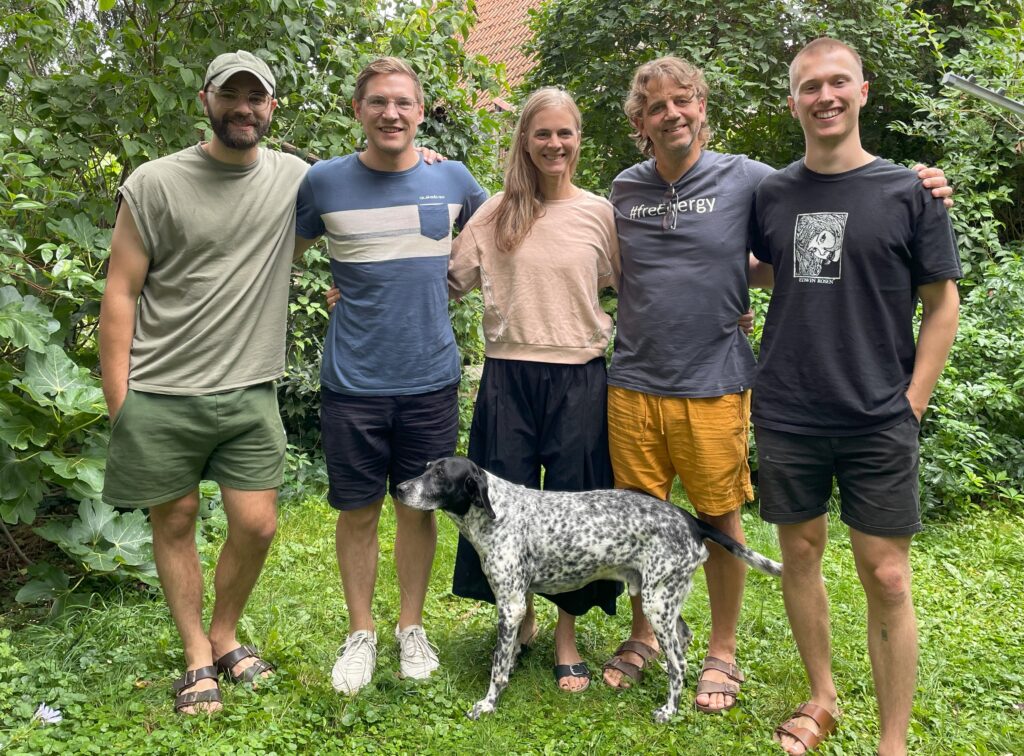
It took us about a year to get from the initial idea to the presentation of the curriculum. Not because the work was so complex, but because we managed it alongside our professional commitments. From the very beginning, it was clear: our main jobs take priority. We want to approach our passion projects with joy and without the pressure of deadlines—that is important to us.
Vision and Goals
At the outset, it was important to us to develop a shared vision: What do we want to achieve with this project, and what can we realistically implement right now or as a first step?
In the long term, our goal is to enable students to earn a state-recognized certificate or—if we dare to dream—to complete a full vocational training program at the school. In the short term, we have defined our goal as giving young people the opportunity to discover whether they can imagine a professional future in the photovoltaic industry. Ideally, this would lead to (international) internship opportunities for the most talented students. Naturally, this follows our motto: Theory meets Practice. At the end of the first project phase, a PV system is to be installed at the school so that future generations of students can benefit from the operational experience. It is crucial to us that the system is self-sustaining; only if the project can be implemented economically will we have created a flagship project that hopefully inspires other schools and organizations. If others follow our lead, we would be all the more delighted.
In Search of the Right Content
To turn these ambitious goals into reality, we first had to focus on the theory. What should a curriculum look like, which topics need to be covered, and who is the target audience?
Since the teachers are responsible for adapting the content to be age-appropriate for the students, we developed the curriculum for adults. The aim was to cover everything related to photovoltaics—not too extensive, yet not too brief. The result was 12 chapters spread across just over 50 pages.
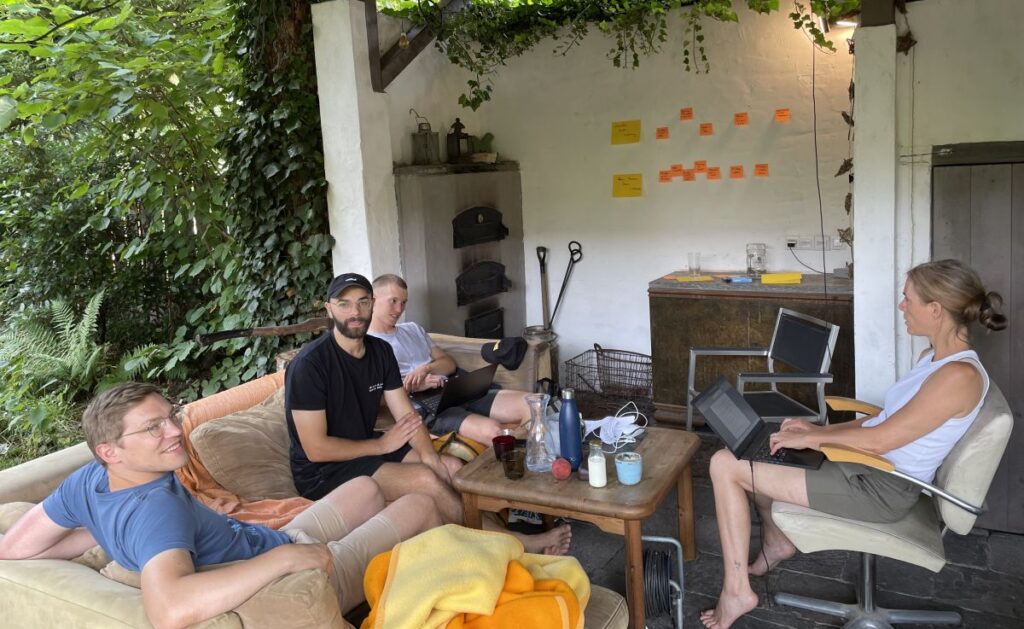
After structuring the content, we divided the chapters among ourselves, discussed them during a joint working weekend (see image), and merged them into a single document. You can view and download the curriculum here: PV-Curriculum.
We are also happy to provide an editable version of the document upon request.
The Concept
Based on the guidelines and learning objectives anchored in the curriculum, we developed a detailed project plan that set the framework for the next steps.
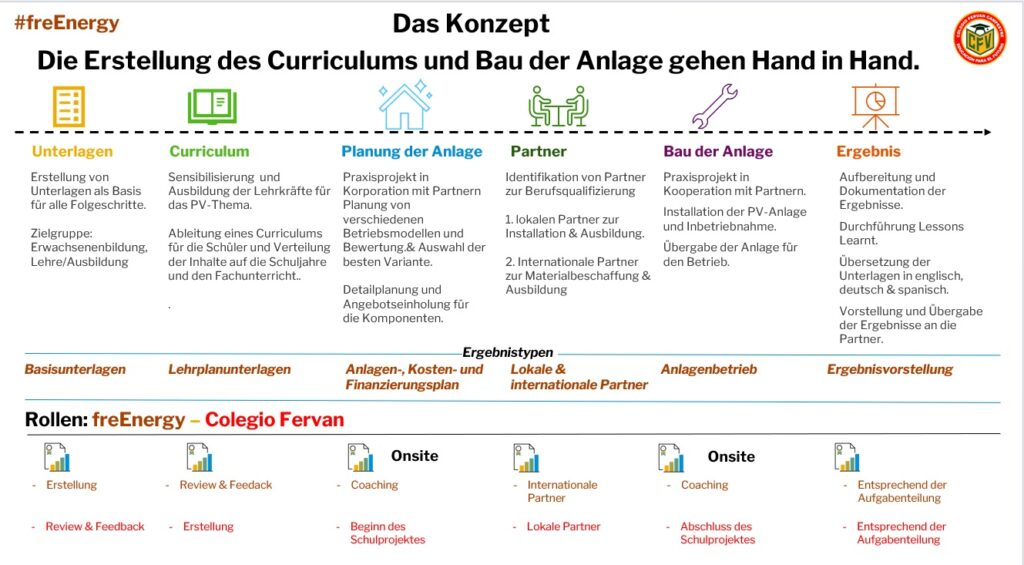
Structured Layout and Step-by-Step Development
The project follows a clear, phase-oriented structure. True to the motto “one step at a time,” we are moving toward our goal. Each phase builds logically on the previous one, ensuring structured development. Nevertheless, we wanted to remain flexible; therefore, this concept is not a rigid set of rules, but rather a first draft—it serves as a guide on the path to our objective and as a valuable document for engaging with partners and interested parties. The resulting impulses and feedback have further refined the concept and helped us find the best path for our specific situation.